How to Tune a Guitar
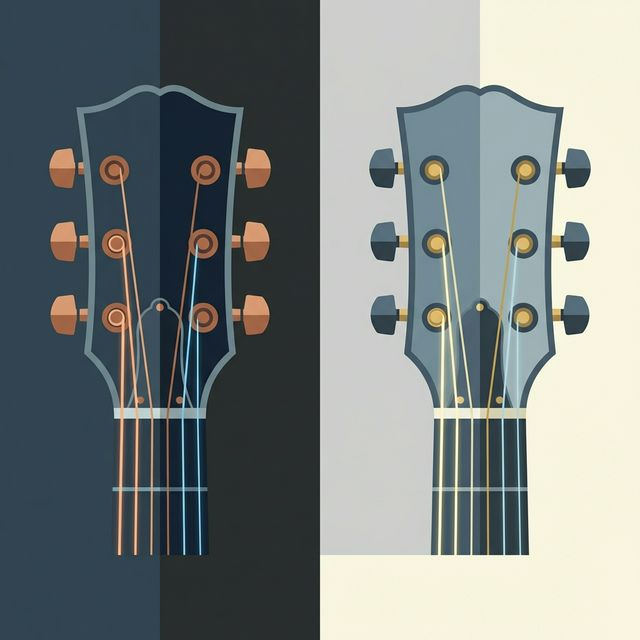
Tuning your guitar is the essential first step before every practice session or performance. Consistent, accurate tuning trains your ear, makes chord shapes sound correct, and ensures you’re playing in harmony with other musicians.
Standard Guitar Tuning: E-A-D-G-B-E
Standard guitar tuning is E-A-D-G-B-E, from the thickest string (6th, lowest pitched) to the thinnest string (1st, highest pitched). All six strings ascend in pitch, making it a linear tuning system.
| String | Note | Frequency | Description |
|---|---|---|---|
| 6th (thickest) | E2 | 82.41 Hz | Low E — closest to your chin |
| 5th | A2 | 110.00 Hz | A string |
| 4th | D3 | 146.83 Hz | D string |
| 3rd | G3 | 196.00 Hz | G string |
| 2nd | B3 | 246.94 Hz | B string |
| 1st (thinnest) | E4 | 329.63 Hz | High E — closest to the floor |
Pro Tips for Stability
- Always tune up to the pitch. If a string is sharp, loosen it below the note and tighten back up.
- Stretch new strings. Gently pull new strings away from the fretboard and retune several times.
- Check tuning throughout. Temperature changes can cause strings to shift.